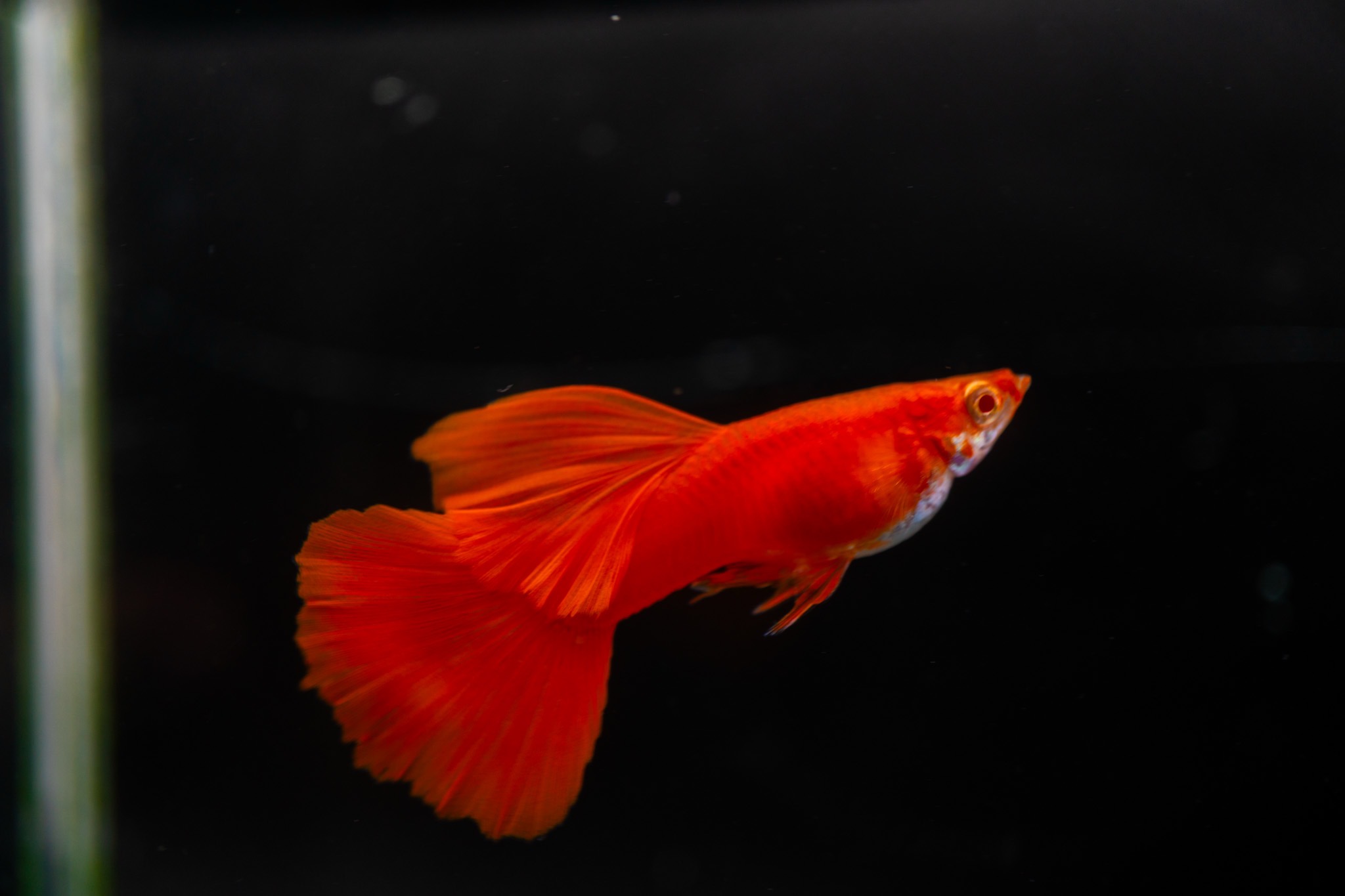
Welcome to the wonderful world of guppy keeping. If you’re reading this, you’re probably about to bring home your first guppies — or maybe you already have, and you’re trying to figure out how to keep them healthy and happy.
Either way, you’ve come to the right place. This guide covers everything a beginner needs to know about caring for guppies, written by people who actually breed and raise them every single day.
By the end of this article, you’ll know exactly what tank to buy, how to set it up, what to feed your fish, and how to avoid the most common mistakes new guppy keepers make.
Let’s dive in.
Why Guppies Are Perfect for Beginners
Guppies (Poecilia reticulata) are one of the most popular freshwater fish in the world — and for good reason. They check almost every box on a beginner’s wishlist:
- Hardy and forgiving. Guppies tolerate a wide range of water conditions. Small mistakes won’t kill them.
- Beautiful colors. No two guppies look exactly alike. From neon blues to fiery reds, they’re stunning.
- Active and social. They swim constantly and interact with each other, making them fun to watch.
- Affordable. A pair of healthy guppies costs just a few dollars, and they multiply on their own.
- Small. Adult guppies grow to only 1.5–2.5 inches, so they fit in modest-sized tanks.
- Peaceful. They don’t fight or eat their tank mates (with some exceptions we’ll cover).
If you’re nervous about starting your first aquarium, guppies are an excellent confidence builder.
What You Need Before Getting Guppies
Before you bring home a single fish, you need to set up their home. Buying fish first and equipment second is the number one beginner mistake — and it usually ends with dead fish.
Here’s your essential checklist:
Tank Size
The minimum tank size for guppies is 10 gallons (38 liters). Smaller tanks are harder to keep stable and limit how many fish you can keep.
A good rule of thumb:
- 10-gallon tank: 5–6 guppies maximum
- 20-gallon tank: 10–12 guppies
- 29-gallon tank: 15–18 guppies
If you plan to breed your guppies (and you probably will — it happens whether you plan it or not), bigger is better.
Filter
A hang-on-back (HOB) filter or sponge filter rated for your tank size is essential. Filtration removes ammonia and waste, keeping your water safe.
Sponge filters are gentler and great for tanks with baby guppies. HOB filters are more powerful and better for larger tanks.
Heater
Guppies are tropical fish. They need water between 72°F and 82°F (22°C–28°C). Unless you live somewhere consistently warm, you’ll need an adjustable aquarium heater.
For a 10-gallon tank, a 50-watt heater is enough. For 20+ gallons, get a 100-watt model.
Lights
Lights aren’t strictly necessary for the fish, but they help you see your guppies and grow live plants if you choose to add them. A simple LED light works fine — 8 hours per day is plenty.
Substrate
The bottom of your tank can be:
- Sand (looks natural, easy to clean)
- Aquarium gravel (most common, cheap)
- Bare bottom (easiest to clean, but less attractive)
Avoid sharp gravel that could damage your guppies’ fins.
Water Conditioner
Tap water contains chlorine and chloramine that will kill your fish. A water conditioner like Seachem Prime or API Tap Water Conditioner neutralizes these chemicals instantly.
You’ll use this every time you do a water change.
Test Kit
You can’t manage what you can’t measure. A liquid test kit (the API Freshwater Master Test Kit is the industry standard) lets you check ammonia, nitrite, nitrate, and pH.
This single tool will save you from countless problems.
Setting Up Your Guppy Tank
Now that you have everything, let’s set up the tank. Don’t rush this — taking the time to do it right will save you weeks of frustration.
Step 1: Position the Tank
Place your tank on a sturdy surface that can support the weight (water is heavy — 1 gallon = 8.3 lbs). Avoid:
- Direct sunlight (causes algae blooms)
- Drafty windows (temperature swings)
- High-traffic areas (stresses the fish)
Step 2: Rinse Everything
Rinse your tank, gravel, decorations, and filter with plain water only. Never use soap — it leaves residue that kills fish.
Step 3: Add Substrate and Decorations
Pour your gravel or sand into the tank (about 1–2 inches deep). Arrange any rocks, driftwood, or decorations.
Step 4: Fill With Water
Slowly fill the tank with dechlorinated water. Add water conditioner according to the bottle instructions.
Step 5: Install and Start the Filter and Heater
Plug in your filter and heater. Set the heater to 76°F and let the tank run for at least 24 hours before adding fish.
Step 6: Cycle the Tank (CRITICAL)
This is the step most beginners skip — and pay the price for. Cycling means establishing beneficial bacteria that break down toxic ammonia.
A new tank without cycling will give your fish ammonia poisoning within days.
You have two options:
Option A: Fishless Cycle (Best, takes 2–4 weeks) Add pure ammonia or fish food daily and wait until your test kit shows ammonia and nitrite at zero, with nitrate present.
Option B: Bottled Bacteria Shortcut Products like Seachem Stability or Tetra SafeStart Plus add beneficial bacteria instantly. With these, you can add fish in 1–2 days. Still test water daily.
We’ll cover cycling in detail in another guide. For now, just know: don’t skip it.
Water Parameters Guppies Need
Guppies are flexible, but they thrive within these ranges:
| Parameter | Ideal Range |
|---|---|
| Temperature | 76–80°F (24–27°C) |
| pH | 7.0–8.0 |
| Hardness (GH) | Medium to hard |
| Ammonia | 0 ppm |
| Nitrite | 0 ppm |
| Nitrate | Below 20 ppm |
Test your water weekly for the first month, then monthly after that. This catches problems before they kill fish.
If your tap water is very soft or acidic, you may need to add minerals. Most municipal water works fine.
Feeding Your Guppies
Guppies are omnivores — they eat both plant and animal matter. A varied diet keeps them healthy and brings out their best colors.
What to Feed
Daily staple: High-quality flake food made for tropical fish. Look for products where the first ingredient is fish meal, not wheat.
2–3 times per week: Frozen or freeze-dried treats like:
- Bloodworms
- Brine shrimp
- Daphnia
Occasional: Blanched vegetables (peas, zucchini, spinach)
How Much to Feed
Feed only what your guppies can eat in 30–60 seconds, twice a day. Uneaten food rots and pollutes the water.
A common saying: “It’s better to underfeed than overfeed.” Guppies can survive a week without food — they can’t survive ammonia spikes from rotting leftovers.
Skip One Day Per Week
Many experienced breeders skip feeding one day a week. This gives the fish’s digestive system a break and helps prevent constipation and bloating.
Best Tank Mates for Guppies
Guppies are peaceful and do well with other community fish — but choose carefully. Some species will nip their fancy tails or even eat them.
Great Tank Mates
- Other guppies (their own kind is always fine)
- Endler’s livebearers (close relatives, similar care)
- Platies and mollies (peaceful, similar size)
- Corydoras catfish (bottom-dwellers, won’t bother guppies)
- Otocinclus catfish (algae eaters, peaceful)
- Neon and ember tetras (peaceful, similar size)
- Cherry shrimp (fine in adult tanks; baby shrimp may get eaten)
Tank Mates to Avoid
- Bettas (can be aggressive toward guppy tails)
- Tiger barbs (notorious fin-nippers)
- Cichlids (most are too aggressive)
- Goldfish (different temperature and waste levels)
- Large predatory fish (they’ll eat your guppies)
Common Health Problems and How to Spot Them
A healthy guppy is active, eats eagerly, and has clear eyes and a flat belly. Watch for these warning signs:
Ich (White Spot Disease)
Symptoms: Tiny white dots on body and fins, scratching against decor.
Treatment: Raise tank temperature to 82°F for two weeks and add aquarium salt or an ich medication.
Fin Rot
Symptoms: Frayed or disappearing fins, often with a white edge.
Cause: Poor water quality.
Treatment: Improve water quality immediately. Severe cases need antibiotic treatment.
Swim Bladder Disorder
Symptoms: Difficulty swimming, floating sideways, or sinking.
Cause: Often from overfeeding or constipation.
Treatment: Skip feeding for 2–3 days. Then offer one blanched, deshelled pea.
Velvet
Symptoms: Gold or rust-colored dust covering the body.
Treatment: Dim the tank lights and treat with copper-based medication.
The best prevention for all of these is clean water and good food.
Breeding Guppies (It Will Happen)
If you have male and female guppies in the same tank, they will breed. There’s no preventing it. Here’s what to expect:
- A female guppy gives birth to 20–60 live babies every 4–6 weeks
- She can store sperm and produce up to 8 batches from a single mating
- Adult guppies, including parents, will eat the babies if given the chance
To save the babies (called fry):
- Add lots of fine plants like Java moss to give them hiding spots
- Or move the pregnant female to a separate breeding box right before she gives birth
- Feed fry crushed flake food or baby brine shrimp 4–5 times per day
We’ll cover breeding in much more detail in our Guppy Breeding Guide for Beginners (coming soon).
Top 5 Mistakes Beginners Make
Avoid these and you’ll save yourself a lot of heartache:
1. Skipping the cycling process. As we covered above, this kills more fish than anything else. Be patient.
2. Overfeeding. Excess food rots and creates ammonia. Feed less than you think you should.
3. Buying too many fish at once. A new tank can only handle a small bioload. Add 2–3 fish at a time, then wait two weeks.
4. Mixing the wrong tank mates. Always research a fish before buying. Pet store employees often give bad advice.
5. Ignoring water testing. Your test kit is your most important tool. Use it.
Quick Reference: Weekly Care Routine
Here’s a simple maintenance schedule:
Daily:
- Feed twice (small amounts)
- Check temperature
- Look for sick or unusual behavior
Weekly:
- Test water (ammonia, nitrite, nitrate, pH)
- Do a 25% water change
- Wipe inside glass if algae is forming
Monthly:
- Clean filter media in tank water (never tap water)
- Trim plants if needed
- Check equipment for wear
A clean, stable tank takes about 15 minutes per week to maintain. That’s it.
FAQ
How long do guppies live?
With good care, guppies live 2–3 years. Females generally live longer than males.
Can guppies live alone?
They can survive alone, but they’re social and much happier in groups of 5 or more.
How fast do guppy fry grow?
Guppy fry reach adult size in about 3–4 months. Their colors develop fully by 6 months.
Do I need a male and female?
Only if you want babies. An all-male or all-female tank is fine — and avoids constant breeding.
Can guppies live with goldfish?
No. Goldfish need cooler water and produce too much waste for a guppy tank.
What’s the difference between guppies and Endlers?
Endler’s livebearers (Poecilia wingei) are a closely related species. They’re smaller and often more colorful, but care is nearly identical.
Do guppies need an air pump?
Not strictly. A good filter provides enough surface agitation. But an air pump never hurts.
Final Thoughts
Guppies are the perfect first fish — but only if you set them up for success. Take the time to cycle your tank, feed them well, and check your water, and they’ll reward you with years of color and activity.
If you remember just three things from this guide:
- Cycle your tank before adding fish.
- Test your water regularly.
- Less food is better than more.
Welcome to the hobby. Your guppy journey is just beginning, and we’re glad to be part of it.
For more guides, check out our growing library of articles on guppy care, breeding, balloon mollies, and beginner aquarium tips.
Happy fishkeeping! 🐟